Generated face evidence
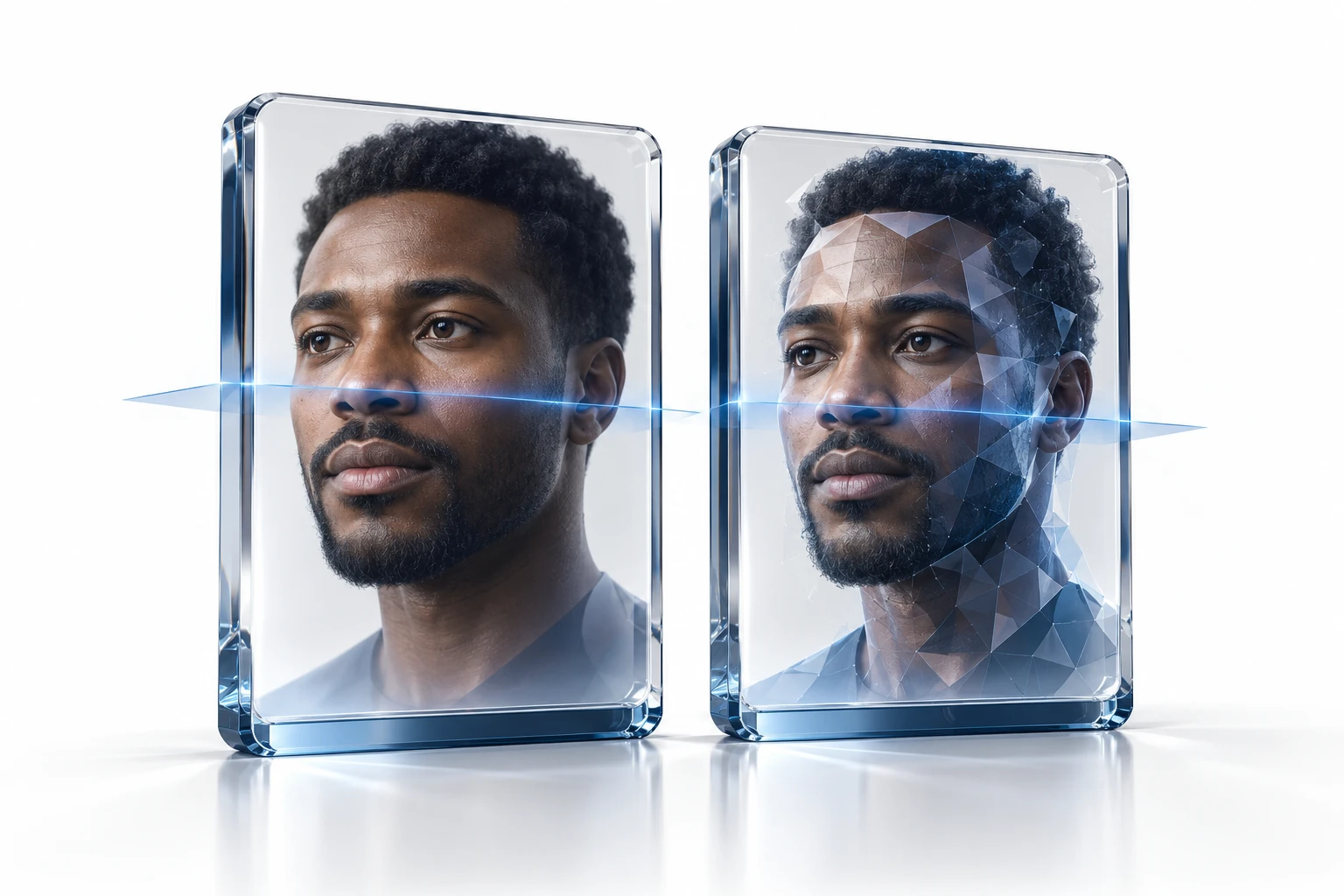
Deepfakes can create a convincing portrait or alter the identity shown in a video. FaceX’s deepfake models assess face evidence for synthetic or manipulated content.
FaceX combines deepfake detection models trained from scratch with camera authenticity checks, anti-spoofing and a risk engine. Captured face evidence is assessed for manipulation before it supports an identity decision.
FaceX-developed detection models.
Evidence of generated or altered media.
Detection signals feed the risk engine.
Deepfakes can create a convincing portrait or alter the identity shown in a video. FaceX’s deepfake models assess face evidence for synthetic or manipulated content.
A face that resembles the reference can still be artificial. Deepfake detection adds an authenticity assessment alongside the identity comparison.
The media assessment is considered with camera integrity and anti-spoofing signals. One reassuring result should not cancel a critical integrity failure.
Follow face evidence into the detection layer and then into a combined decision. The diagram explains the security relationship; it does not reveal model internals or decision thresholds.
Choose a scenario to see how different signals can affect an example decision.
Illustrative scenarios only. These qualitative signals and policies do not expose production scores or thresholds. No camera access, biometric capture or live check occurs on this page.
The 99% figure is reported by FaceX. Public benchmark methodology and independent validation are not available on this page. It is not a guarantee that every deepfake, injection or presentation attack will be blocked.
A useful benchmark identifies the model version, test size, attack types, devices, capture conditions and decision threshold. Detection rates can change when those conditions change.
Report missed attacks alongside genuine-user rejection rates. A detector’s performance and the complete verification system’s performance are separate measurements.
No. Matching assesses resemblance to an identity reference. Manipulation detection, camera authenticity and anti-spoofing address separate risks.
No. The 99% figure is FaceX-reported performance, not a universal guarantee. Its meaning depends on the evaluated attacks, test conditions, decision threshold and errors on genuine users.
The risk engine can route an inconclusive result for review or further capture according to the integration’s decision policy. The scenarios here illustrate that distinction.